8 hr
Tiran Island Snorkeling and Diving Cruise with Lunch
Sail to Tiran Island's renowned reefs for snorkeling and diving, with lunch served aboard your Red Sea cruise.
Reserve
Hand-picked by our editors — only the best 5 experiences from 18 reviewed.
Verified partners for every tour, free cancellation where available, and instant confirmation on every booking.
8 hr
Sail to Tiran Island's renowned reefs for snorkeling and diving, with lunch served aboard your Red Sea cruise.
Reserve
9 hr
Discover vibrant coral reefs and pristine beaches on this full-day Red Sea adventure from Sharm El-Sheikh
Reserve
9 hr
Explore vibrant reefs and pristine sandbars on a full-day Red Sea yacht adventure with diving option
ReservePrices from verified partners. Availability updates in real time at checkout. Free cancellation policies apply where shown.
The landmarks, rooms, and views travelers on this tour remember — all visible on a single visit.
This northernmost site is celebrated for its sheer wall and high chance of spotting sharks or rays.
Known for the rusted hull of the Lara shipwreck, this shallow site is perfect for photography.
The smallest of the four reefs, it features a vibrant coral-covered plateau popular with snorkelers.
A long, narrow site famous for drift snorkeling and spotting pelagic fish species.
The deep channel separating the Sinai Peninsula from the island, offering pristine water clarity.
They complement each other; most visitors who do both find the open-sea currents of Tiran more exhilarating, while Ras Mohamed offers superior coastal diversity. Securing your tiran island snorkeling trip tours early ensures you experience the primary reef sites before the peak boat traffic arrives.
| Feature | Top pick Tiran Island | Ras Mohamed NP |
|---|---|---|
Experience Type |
Open-sea wall diving | Protected coastal sanctuary |
Primary Reef Features |
Deep-water currents, shipwrecks | Shallow coral gardens, mangroves |
Typical Crowd Levels |
Moderate to high | High during peak season |
Ease of Access |
Boat only | Boat or vehicle access |
Best For |
Experienced swimmers, drift snorkeling | Beginners, marine life observation |
Entrance Fee |
15 USD (conservation fee) | 10 USD (park entry fee) |
| See tickets → |
Verdict: Choose the Tiran Island snorkeling trip for high-energy drift snorkeling, or opt for Ras Mohamed if you prefer a broader range of sheltered marine habitats and tiran island snorkeling trip tickets for surrounding areas.
Choose your ticket, select your date, and reserve in under two minutes. Secure checkout handled by our verified partner.
Instant confirmation by email, with a mobile voucher you can save offline. No printing, no queuing at a collection desk.
Arrive at the entrance, show your voucher on your phone, and walk in. Most tickets include priority or skip-the-line access.
Practical details for your visit straight from our verified partners — hours, access, rules, and how to get there.
Wear swimwear and light, breathable clothing suitable for a boat deck. A cover-up or windbreaker is recommended for the return trip to protect against sea breezes.
Space on local boats is restricted; bring only a small, soft-sided bag with essentials. Passport copies are often required for harbor security checks before departure.
Underwater cameras are highly recommended to capture coral gardens and marine life. Always agree on pricing in advance if utilizing professional onboard photographers.
Tiran Island snorkeling trip tours primarily involve boarding vessels from a jetty, which may not be wheelchair accessible. Guests should be comfortable navigating boat ladders and decks.
The boat trip is family-friendly, though snorkeling requires basic swimming proficiency. Children should be supervised at all times while on deck and near the water.
Most tours include a freshly prepared buffet lunch and bottled water or soft drinks. Guests are encouraged to stay hydrated throughout the day in the Red Sea sun.
Best time to go, insider tips, nearby landmarks, and the cancellation fine print — flip through to skim what matters to you.
Flexible, no hidden fees.
Cancellations are subject to operator terms, typically requiring 24-hour notice for full refunds. Note that the 15 USD conservation fee per person for access to protected marine areas may be non-refundable.
The Straits of Tiran separate the Gulf of Aqaba from the Red Sea proper across a channel barely five kilometres wide at its narrowest point. Four named reefs—Jackson, Woodhouse, Thomas, and Gordon—rise from depths exceeding eight hundred metres to break the surface, their submerged plateaus forming natural amphitheatres where nutrient-rich currents converge. Egyptian and Israeli authorities designated the waters a protected marine corridor in 1983, limiting vessel traffic to daytime transits and certified tour operators. The conservation fee established in 2009 funds patrol boats and mooring-buoy maintenance that prevents anchor damage to the fragile table corals. Jackson Reef, the northernmost of the quartet, earned its name from a British cartographer's 1869 survey. Its eastern wall drops vertically to four hundred metres, creating upwelling zones where pelagic species—barracuda, tuna, reef sharks—hunt in coordinated packs visible from the surface. Soft corals dominate the shallower western plateau, their polyps extending during morning hours when plankton density peaks. The wreck of the Lara, a Cypriot freighter that struck the reef during a 1985 storm, rests in twelve metres of water on the southern tip, its hull now colonized by fire coral and serving as a cleaning station for humphead wrasse. Gordon Reef, three kilometres south, marks the site of the Louilla wreck, a cargo vessel grounded in 1981 that remains visible above the waterline. Prevailing northerly winds create a sheltered lee on the reef's western face, where visibility exceeds thirty metres on calm mornings. Marine biologists from Suez Canal University conduct seasonal counts here, tagging hawksbill turtles and monitoring bleaching events that have affected less than eight per cent of the hard-coral coverage since 2015. The reef's shallow lagoon, averaging four metres depth, hosts garden eels and blue-spotted stingrays that burrow into the sandy substrate. Tiran Island itself remains uninhabited aside from a seasonal Egyptian military observation post established after the 1979 peace treaty. Saudi Arabia formally ceded the island to Egypt in 2017, ending decades of territorial ambiguity. Tour vessels anchor offshore rather than at the island, as no permanent jetty exists and landing permits require diplomatic clearance. The island's arid geology—limestone outcrops and alluvial fans—supports minimal terrestrial flora, but its surrounding reefs represent the Red Sea's highest concentration of hard-coral genera per square kilometre, a figure unchanged since Jacques Cousteau's 1951 survey documented two hundred thirty-seven species.
"The Straits of Tiran reefs rise from depths exceeding eight hundred metres, forming natural amphitheatres where nutrient-rich currents converge."
A step-by-step walkthrough of the visit — what you'll see, how long each stage takes, and the details that matter.
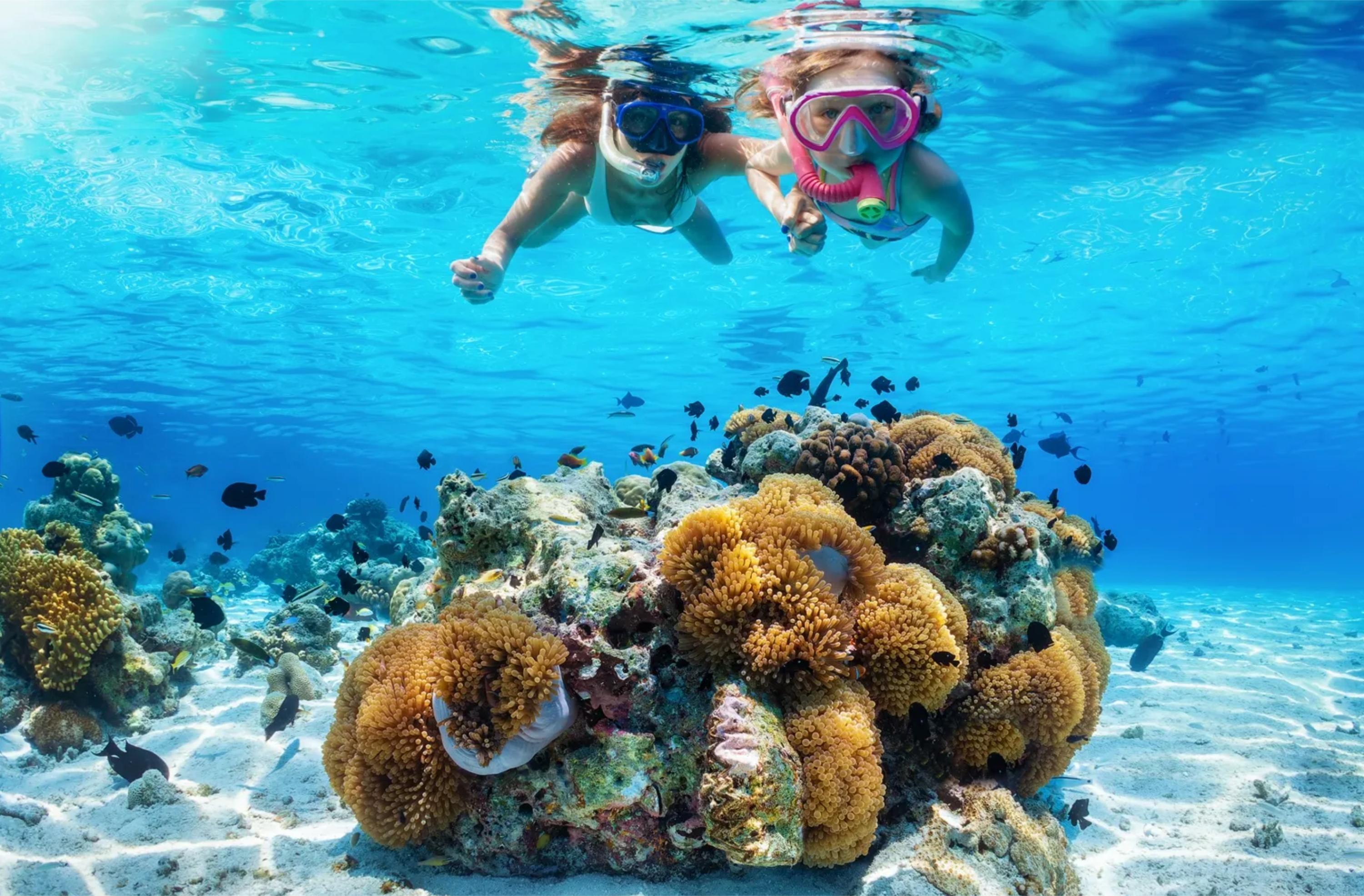
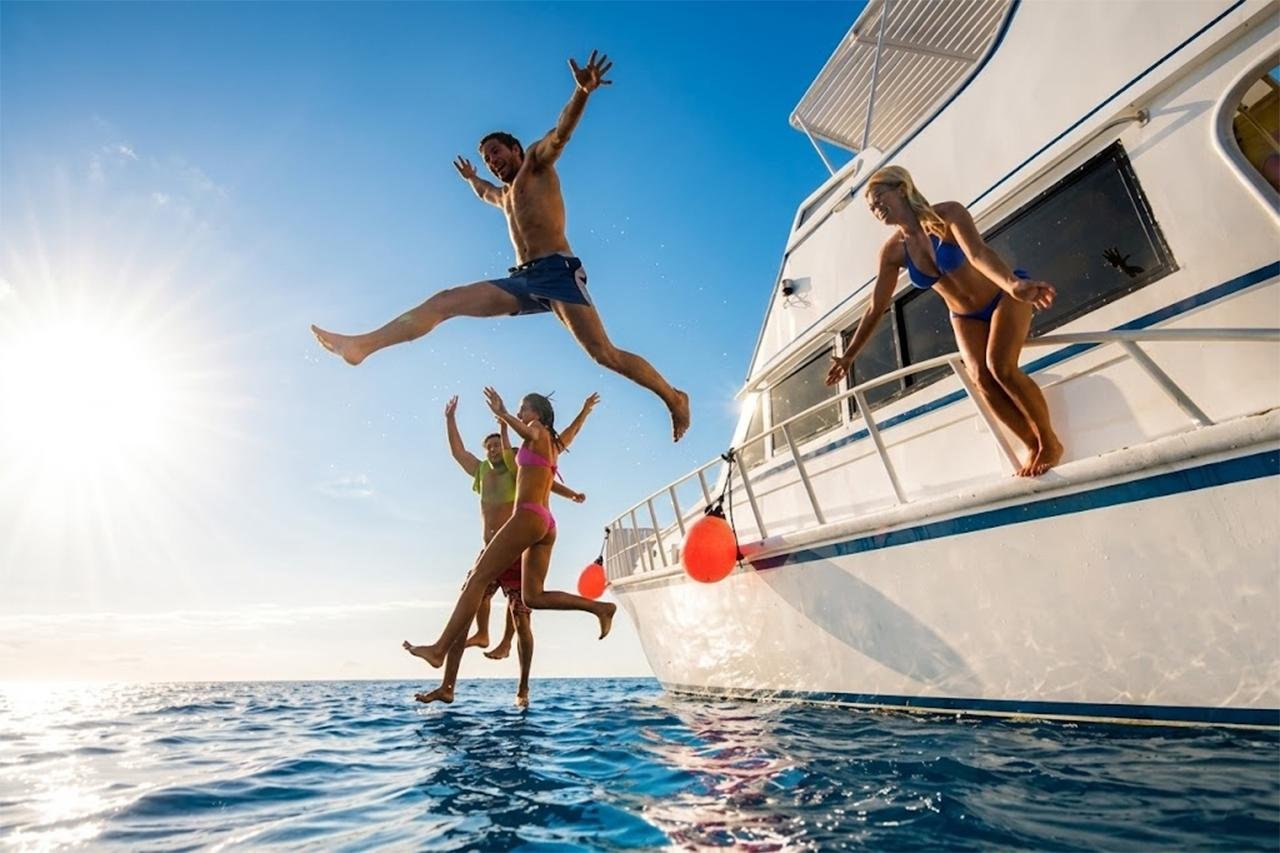
You board at Sharm El Sheikh marina between seven and eight in the morning, the vessel departing once the conservation-fee manifest clears with park authorities. The crossing to Jackson Reef takes ninety minutes, the boat's bow cutting through water that shifts from turquoise to cobalt as the seabed drops beyond dive limits. Crew members distribute masks, fins, and buoyancy vests while the captain briefs you on current patterns and entry points. You enter the water on Jackson's western plateau, descending a mooring line to five metres where the coral wall begins. Anthias swarm in orange clouds above staghorn thickets. You drift south with the mild current, passing a Napoleon wrasse that hovers motionless near a cleaning station. At fifteen minutes the guide signals toward deeper water where a whitetip reef shark patrols the drop-off. The boat repositions to Gordon Reef after an hour. You surface-swim to the Louilla wreck, its rusted superstructure breaking the waterline. Sergeant majors and butterflyfish orbit the hull. A hawksbill turtle grazes on sponges growing through the deck plating, indifferent to your presence at three metres distance. Lunch is served onboard between sites—grilled fish, rice, salad—while the vessel motors to Thomas or Woodhouse depending on wind direction. You complete a third snorkel session in the early afternoon before the return crossing, the water calmer now, visibility holding at twenty-five metres as you descend one final time.
The area is accessible for a Tiran Island snorkeling trip between 07:00 and 17:00 daily.
Yes, there is a 15 USD conservation fee per person for access to protected marine areas during your Tiran Island snorkeling trip.
The best arrival window for your Tiran Island snorkeling trip is 08:00–10:00 to ensure calm seas and fewer crowds.
Most Tiran Island snorkeling trip tours include lunch, drinks, and guide services, but check your specific ticket for equipment rental details.
Yes, many operators welcome families on a Tiran Island snorkeling trip, provided children are supervised and comfortable in the water.
You are welcome to bring your own mask and fins on a Tiran Island snorkeling trip if you prefer using personal equipment.
Operators typically reschedule or refund the Tiran Island snorkeling trip if sea conditions are unsafe for navigation.
Storage is limited on boats, so plan to bring only a small, manageable bag on your Tiran Island snorkeling trip.
Most providers include convenient hotel pick-up and drop-off as part of your Tiran Island snorkeling trip booking.